

The old buyer funnel ran on one button: "schedule a showing". Since August 2024, an agent working with a buyer has to have a written agreement in place before touring a home, so that button now leads straight into a contract conversation with someone who met you five minutes ago. NAR buyer agreement lead generation works when you move that conversation to the front of the funnel and publish the answers buyers want before they'll sign.
This post covers what the rule says, where it breaks a typical agent's lead flow, the changes I'd make to lead capture and content, and what to do if your brokerage controls your website. I'm sticking to the rules as NAR publishes them. I'm not your broker or your lawyer, so run the agreement wording itself past them.
What changed, and when
These are the practice changes as NAR's settlement FAQ page sets them out:
- The changes took effect on August 17, 2024. MLSs had until September 16, 2024 to implement them.
- Offers of compensation can no longer be published on an MLS. They have to be communicated off-MLS.
- MLS participants working with buyers must enter a written agreement before touring a home. The compensation in it has to be "objectively ascertainable" and can't be open-ended.
That's the whole of it for marketing purposes. You'll see a settlement dollar figure quoted everywhere. It wasn't on NAR's page when I checked, and it doesn't change anything you do on your website, so I'm leaving it out.
What the NAR buyer agreement means for lead generation
Think about where your buyer leads came from before. Someone saw a house on a portal or your listing feed, clicked a button to see it, and you met them at the door. The relationship, and usually the paperwork, came later. That order no longer works for touring with an agent.
In practice that creates three problems:
- Showing requests turn into contract requests. A buyer who wanted to see one house is now being asked to agree terms with an agent first. Expect some of them to hesitate and look for an agent who explains it better.
- Buyers arrive with questions. Do I have to sign? What am I agreeing to pay? For how long? Can I change agents? Whoever answers those clearly, in public, before the first call, earns the trust the showing used to build.
- Compensation is now a conversation, not a field. Because offers aren't published on the MLS and the agreement has to state compensation clearly, both buyers and sellers are asking how it works. That's content demand agents can meet.
How to rebuild your lead capture
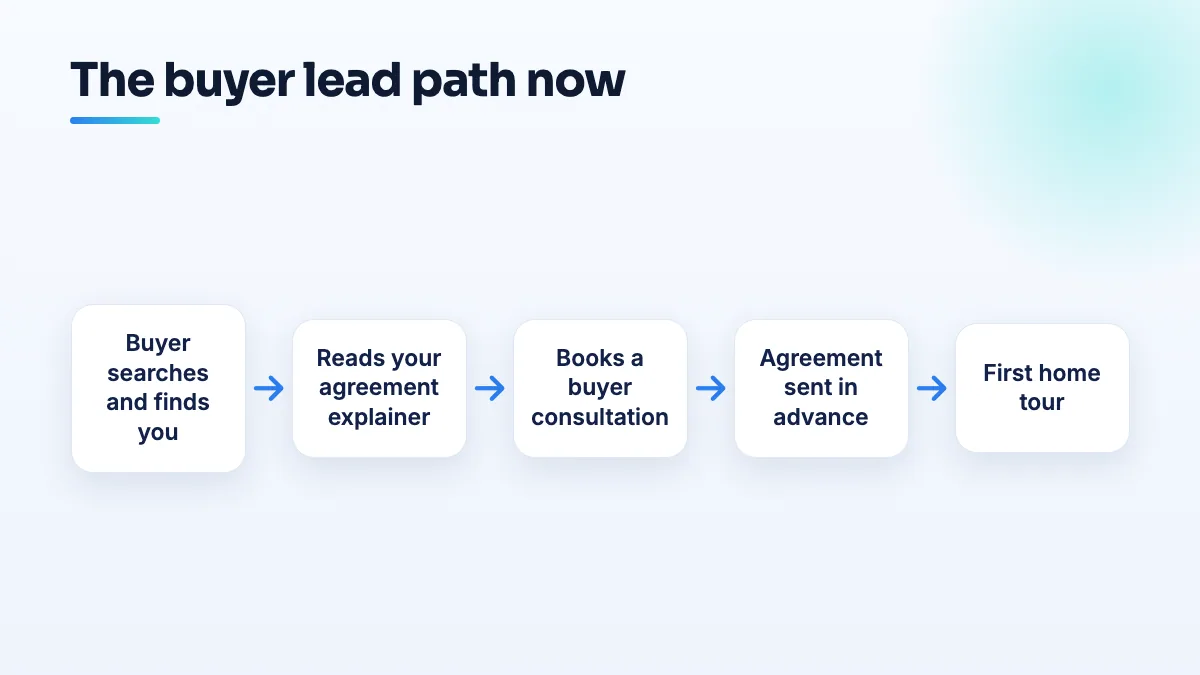
- Make the consultation the main call to action. Replace "schedule a showing" as your primary button with "book a buyer consultation" and say why: we'll go through the agreement before we tour. Keep the showing request if you like, but make it lead to the consultation.
- Write one plain-English page about your buyer agreement. What it is, when you'll ask for it, how your compensation is set and stated, how long the agreement lasts and what happens if the buyer wants to end it. Have your broker approve it. This page will do more selling than any listing page you have.
- Send the agreement before the first tour, never at the front door. Email it with a short explanation the day the consultation is booked. Nobody wants to read terms on a porch while the listing agent waits.
- Check your listing pages and templates for compensation wording. If your site pulls listings from the MLS or you use old templates, make sure nothing still advertises buyer-agent compensation where it shouldn't. Ask your broker and your MLS how they want off-MLS offers communicated.
- Update your Google profile. Add "buyer consultation" as a service and post about how you work with buyers now. It's the first thing many people see when they search your name.
- Measure signed agreements, not form fills. Track which sources produce buyers who sign. A lead source that sends lots of showing requests and few signatures is costing you more than it looks.
Content buyers and sellers now search for
These questions come straight out of the rule, and most agents' sites don't answer them. I'd write a short, honest page or post for each, in your own words and for your market:
- "Do I have to sign an agreement to see a house?" Explain when you ask for it and why, without legal claims you can't back.
- "Who pays the buyer's agent now?" Describe how you handle it and how the amount is stated in your agreement.
- "What happens if I want a different agent?" Explain your agreement's term and how ending it works.
- "Do I have to offer compensation to the buyer's agent?" For sellers: explain what you'll discuss with them, and that offers are no longer made on the MLS.
- "How do I pick a buyer's agent now?" What to ask on a consultation call, including the questions about your own terms.
Keep them local and specific. A buyer in your town wants to know how you do it, not a national summary. If writing isn't your thing, this is the kind of work our SEO content writing team does with the agent's broker in the loop.
If your brokerage controls your website
Many agents can't add a page to their own agent profile on the brokerage site. The agents in a Local Search Forum thread about agents with brokerage-controlled web pages were in exactly that spot, and the advice there was to pour the effort into the Google profile.
For the agreement rule, that means three places to explain yourself: your Google profile posts and services, the email you send when a consultation is booked, and a small site of your own if you're ready to write for it. Ask your brokerage whether it has approved buyer-agreement copy you can reuse. The searches worth targeting when portals own page one are in my guide on how to compete with Zillow in search.
What not to do
- Don't hide the agreement until the doorstep. A buyer who feels ambushed on the porch is a buyer you lose.
- Don't make compensation sound open-ended. The rule requires it to be objectively ascertainable. Vague marketing like "it costs you nothing" invites questions your agreement may contradict.
- Don't give legal opinions on your site. Explain how you work. Send the legal questions to the broker or a lawyer.
- Don't quote settlement figures or statistics you can't source. Buyers check, and a wrong number costs you the trust the page is meant to build.
- Don't lock every page behind a form. The explainer only works if people can read it before they hand over their number.
Where to start
Write the agreement explainer first, then change the button. Everything else can follow. If you want help turning it into pages and a profile that bring in buyers who sign, that's part of our real estate SEO work and our local SEO services.
Written by Saifur Rifat, Founder & SEO Lead at SERP Squad.