
Case study · E-commerce
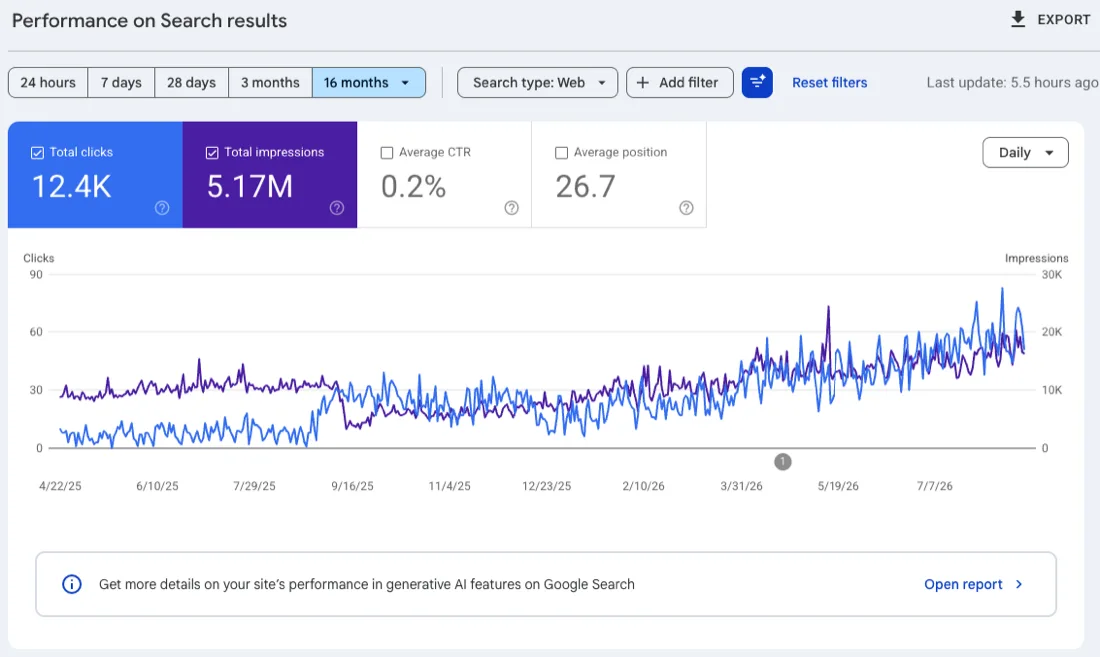
300% organic traffic in 4 months
A Shopify store went from page 3 to category leader with technical and content SEO.
300%organic traffic
4 motime to result
52+page-1 keywords
 For AgenciesWe run SEO fulfillment under your brand, clients stay yours, hassle stays ours.Explore White Label SEO →
At fifty pages, SEO is editing. At fifty thousand, it is systems: which templates rank, what Google crawls, how releases protect what you have built. We bring the governance layer that turns a big site from liability into moat.
Why enterprises buy this
None of these appear on small sites, and all of them cost enterprises real revenue:
Faceted URLs, expired listings and parameter duplicates can outnumber real pages ten to one. Google indexes the noise and crawls the revenue pages less. Governance fixes the ratio.
One heading mistake in a product template is ten thousand mistakes in production. Template-level fixes are the highest-leverage work in SEO, and they need dev-team fluency.
A routine replatform or redesign without SEO gating can vaporize years of authority in one deploy. We sit inside the release process so that never happens.
Systems work, delivered through your existing processes:
Proof, not promises
The same discipline, demonstrated on camera. More on our reviews and case studies page and YouTube channel.
A Shopify store went from page 3 to category leader with technical and content SEO.
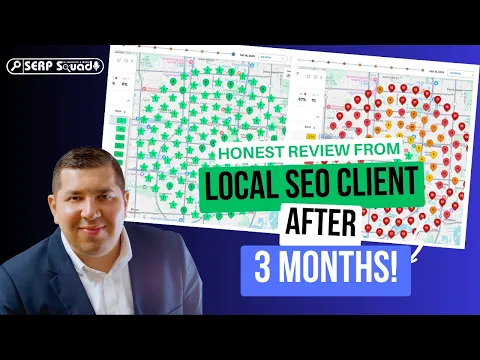
A medical clinic's local visibility transformed after our SEO work took over.
★★★★★“They explained everything in plain English and the rankings followed.”
The first 90 days
Enterprise SEO starts with evidence and ends with governance:
Representative crawl, log-file analysis and index audit, findings quantified in revenue terms.
Template fixes specified to your dev process, quick wins shipped, governance framework drafted.
Index bloat receding, crawl budget refocusing, first template improvements visible in Search Console.
Release gates protecting rankings, teams enabled, and the roadmap executing quarter by quarter.
Transparent reporting
Reporting built for stakeholders, from dev leads to the board:
Indexed pages versus noise, crawl budget allocation and log-file trends, the enterprise vitals.
Rankings and traffic by template and site section, because that is how enterprise sites actually move.
Revenue-framed outcomes and next-quarter priorities on one page leadership reads in three minutes.
What works now
At enterprise scale, every channel is a program with an owner. These six are where your organic visibility lives, and governance keeps them aligned.

Template-level organic rankings across thousands of pages are the enterprise core: section-by-section positions that move with engineering discipline.

Bing matters at enterprise scale: procurement desktops, Copilot answers and a crawler that rewards the clean architecture you already maintain.

Multi-location enterprises manage Apple Business Connect at scale, keeping every location accurate on the default iPhone map.


AI assistants cite enterprises with clean structured data and consistent entity signals. Governance decides whether they cite yours correctly.


Enterprise buyers and analysts cross-check social presence against claims. Alignment between channels protects the brand rankings earn.

Product and thought-leadership video ranks on YouTube where category questions get asked, feeding both buyers and the AI answering them.
Every one of these channels is part of our SEO services; your audit shows which will move first for you.
Honest comparisons
Enterprise channel reviews weigh these three. Honestly:
Enterprise SEM buys visibility page by page at enterprise CPC. One template-level SEO fix moves thousands of pages at once, economics no ad budget matches at scale.
In-house teams own context; specialists own pattern exposure across dozens of enterprise sites. The governance model that works pairs both, with your team enabled, not replaced.
GEO, being cited when buyers and analysts ask about your category, is not a rival discipline. Generative engines lean on the same authority, structure and entity signals strong SEO builds. Entity governance at scale is what AI engines trust.
Service areas
Strategy tuned to how people search in each market. See every market on our service locations page.
Related services
Performance pricing
Ask about pay for performance SEO services if you would rather tie the cost to the outcome. Leads are counted monthly from tracked sources, disputed ones come off the invoice, and there is no lock-in period.
Buyer beware
Enterprise SEO failures are expensive because they hide in complexity. The vendor patterns procurement should catch:
The most common scam is the simplest: a retainer collected every month with no work log and no report. If an agency cannot show you exactly what was done in the last 30 days, the honest answer is usually nothing.
Some agencies register your domain, own your hosting and keep your logins, then the site vanishes if you stop paying. Your domain, website and Google Business Profile must be owned by you, always.
Hundreds of auto-generated blog posts feel like activity, but unedited AI content nobody reads produces no leads and can drag the whole site down. Volume is not a strategy; content only counts when it answers real searches.
Nobody controls Google's results, and Google itself says ranking guarantees are the mark of a scam. Real agencies show evidence and timelines; fake ones sell certainty they cannot deliver.
A 12-month contract exists so an agency gets paid whether it performs or not. If the results were real, the contract would not need to trap you, which is why we do not use one.
Thousand-link packages from link farms and PBNs look like progress until Google catches the network, and it is your site that takes the manual action. Recovering costs more than the links ever did.
Ask any agency, us included, for three things before you pay: a sample monthly report, written confirmation that you own your domain, website, hosting and Google Business Profile, and the work log from a current client's last 30 days. We show all three in your free audit call, plus reviews you can verify on Google and Trustpilot. An agency that hesitates on any of them has answered your question.
Sites with tens of thousands of URLs, multiple stakeholders and real release processes. At that scale the work shifts from tweaking pages to governing systems: crawl budget, templates, migrations and internal alignment.
Through your process, not around it: tickets written to your spec with acceptance criteria, priorities argued in business terms, and validation after every release. SEO recommendations that die in a backlog are worthless, so we write them to survive it.
Yes, that is often why enterprises hire us. Full URL inventory, redirect mapping, staged validation and post-launch monitoring. Migrations lose rankings when nobody owns the checklist; we own it.
This is one of our core enterprise use cases. Replatforms and redesigns are where enterprises lose years of equity in a week. We run migration protection end to end: crawl baselines, redirect mapping at scale, staged cutover checks and post-launch monitoring against the baseline.
Through your process, not around it: tickets specified to your templates, acceptance criteria your QA can test, and priorities argued in revenue terms your product owners can rank honestly.
Fresh from the desk
What we publish between campaigns. Worth a read if you want to understand how this work actually gets done before you pay anyone to do it.
We crawl a representative section, read your logs, and present findings in one working session: what is bleeding, what it costs, and the fix order.