
Case study · E-commerce
300% organic traffic in 4 months
A Shopify store went from page 3 to category leader with technical and content SEO.
300%organic traffic
4 motime to result
52+page-1 keywords
 For AgenciesWe run SEO fulfillment under your brand, clients stay yours, hassle stays ours.Explore White Label SEO →
Every click you buy disappears when the budget stops. Organic rankings compound. We build the collections, product pages and content that keep selling long after the work is done.
Why stores buy this
Three numbers every store owner should run:
Ads alone push acquisition cost up every quarter. Organic traffic pulls the blended number back down and keeps margins alive.
Category keywords carry buying intent and volume. A ranked collection page sells every day without a budget. Most stores never optimize theirs.
Buying guides and comparisons reach shoppers before they know which brand to search. That is market share your ads never see.
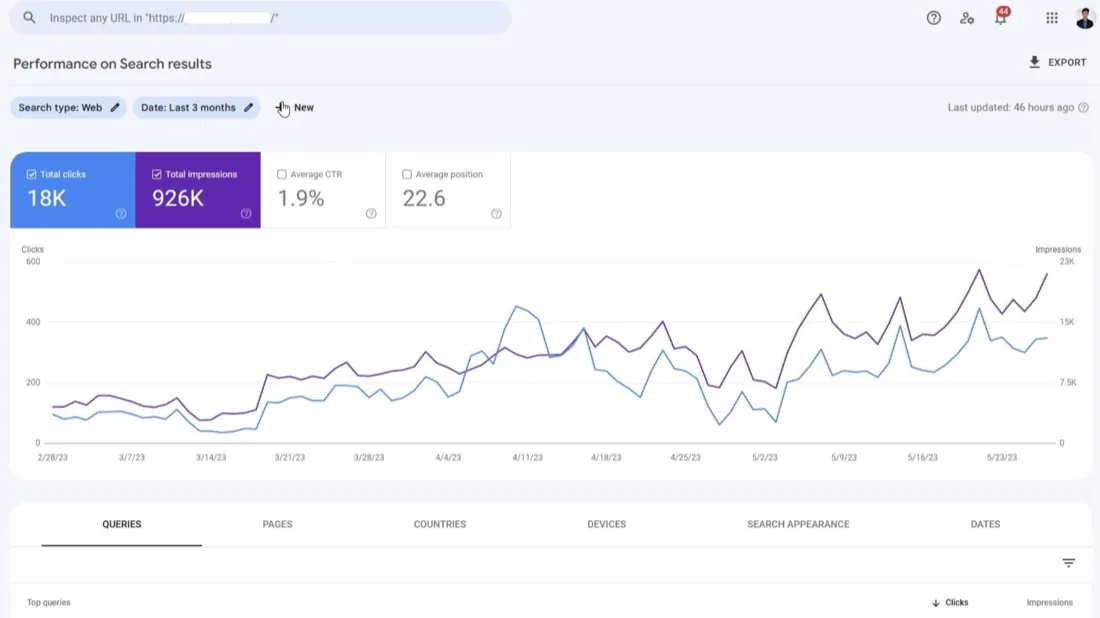
A store's Search Console over one quarter: 18K clicks from 926K impressions, with both curves still climbing at the right edge.
Proof, not promises
The 300% Shopify case study and a client review. More on our client reviews page and YouTube channel.
A Shopify store went from page 3 to category leader with technical and content SEO.

A service business owner on what changed after SERP Squad took over.
★★★★★“The leads speak for themselves. Best marketing decision we've made.”
Any platform
The parent strategy is the same; execution is platform-specific.
The first 90 days
Ecommerce SEO is sequenced by revenue impact, not by ease:
Technical scan, collection review and keyword mapping, all prioritized by which fixes move revenue first.
Top collections rewritten, product schema live, crawl budget reclaimed from parameter soup.
Buying keywords climb, sessions convert, and attribution shows the first organic revenue gains.
The playbook extends across the catalog while content catches shoppers before they compare.
Transparent reporting
The report you care about shows what organic search sold.
Sales attributed to organic search by category, tracked monthly against baseline, the only ecommerce metric that matters.
Collection and product keywords with positions, movement and the pages that carry them.
Fixes shipped, pages optimized and content published this month, each tied to its revenue purpose.
What works now
Ecommerce revenue arrives from six directions now. Your campaign wires the catalog into all of them, and attribution shows which ones sell.

Category and product pages ranking organically are the store's compounding revenue engine, selling daily without a rising cost per click.

Considered purchases get desktop research, where Bing holds share and feeds Copilot product answers. A properly indexed catalog captures those carts.

Retailers with physical locations connect online catalogs to in-store pickup through Apple Business Connect on the default iPhone map.


Shoppers ask AI what to buy and where. Product schema, review markup and citable category content decide whether your store gets named.


Unknown stores get vetted on social before checkout. Consistent product presence converts that hesitation into first orders.

Product demos and unboxings rank in YouTube search at decision moments, prove quality photos cannot and feed AI shopping answers.
Every one of these channels is part of our SEO services; your audit shows which will move first for you.
Honest comparisons
Store budgets face the same forks. The honest weighing:
Every paid order pays the platform first. Category rankings sell at full margin, and their cost per order falls as they compound, the opposite curve to your ad account.
Marketplaces rent you demand at commission plus the customer relationship. A ranked store builds demand you own. Run marketplaces tactically; rank the store structurally.
GEO, being cited when shoppers ask what to buy and where, is not a rival discipline. Generative engines lean on the same authority, structure and entity signals strong SEO builds. Product schema and buying guides are exactly what AI cites.
Service areas
Strategy tuned to how people search in each market. See every market on our service locations page.
Related services
A different pricing model
For businesses with a known job value, pay per result SEO is often the cleaner arrangement: an agreed amount per qualified enquiry, evidenced, and invoiced after you have reviewed the count.
Buyer beware
Store owners see more fake SEO than anyone, because thin product pages at scale imitate work so easily. The patterns:
The most common scam is the simplest: a retainer collected every month with no work log and no report. If an agency cannot show you exactly what was done in the last 30 days, the honest answer is usually nothing.
Some agencies register your domain, own your hosting and keep your logins, then the site vanishes if you stop paying. Your domain, website and Google Business Profile must be owned by you, always.
Hundreds of auto-generated blog posts feel like activity, but unedited AI content nobody reads produces no leads and can drag the whole site down. Volume is not a strategy; content only counts when it answers real searches.
Nobody controls Google's results, and Google itself says ranking guarantees are the mark of a scam. Real agencies show evidence and timelines; fake ones sell certainty they cannot deliver.
A 12-month contract exists so an agency gets paid whether it performs or not. If the results were real, the contract would not need to trap you, which is why we do not use one.
Thousand-link packages from link farms and PBNs look like progress until Google catches the network, and it is your site that takes the manual action. Recovering costs more than the links ever did.
Ask any agency, us included, for three things before you pay: a sample monthly report, written confirmation that you own your domain, website, hosting and Google Business Profile, and the work log from a current client's last 30 days. We show all three in your free audit call, plus reviews you can verify on Google and Trustpilot. An agency that hesitates on any of them has answered your question.
Store-specific work
A store is not a brochure site with a cart bolted on. These are the issues that never come up on a service site and decide rankings on one that sells.
Faceted navigation multiplies every collection into hundreds of filter URL combinations. Left open, they eat crawl budget and split ranking signals across near-identical pages. Which combinations stay indexable is a decision, not a default.
Merchant Center reads your product feed, and the quality of that feed decides whether you appear in shopping results and free merchant listings. Titles, GTINs, availability and price accuracy are SEO work, even though they never touch a web page.
A variant that gets its own URL competes with its parent. A product that goes out of stock should not quietly return a 404 and lose everything it earned. Both need a rule set before they cost you rankings.
Product schema and review schema are what put price, availability and star ratings into the result itself. That is the difference between a listing that gets scrolled past and one that gets clicked.
Ranking a low-margin product is a hollow win. We report average order value alongside sessions, because AOV is what decides whether the extra traffic was worth having.
Slow checkout, surprise shipping costs and missing trust signals show up as cart abandonment, and every one of them is fixable on the same pages we are already optimising.
Collection and product optimization, technical cleanup, schema, content strategy and authority building, prioritized by which keywords produce revenue for your store.
Shopify and WooCommerce are our deepest specialties; the principles apply to any platform. Platform playbooks live on the Shopify SEO and WordPress SEO pages.
Organic revenue, not just traffic. Rankings and sessions are the route; the report you care about shows what organic search sold.
With rules, not improvisation: temporary stock-outs keep their pages live with availability schema, discontinued products 301 to the closest alternative or category, and seasonal items persist year-round to hold their rankings.
Both can coexist, but they build different assets. Amazon rents you demand; your store's rankings are equity. We prioritize the searches where your own store can win, and stay honest about the ones where marketplaces dominate the results page.
Fresh from the desk
What we publish between campaigns. Worth a read if you want to understand how this work actually gets done before you pay anyone to do it.
Your audit maps the keywords your store could own, the technical issues costing you crawl budget, and the content gaps between you and page 1.
 WordPress SEO
 Shopify SEO
 WIX SEO
 Webflow SEO
 Squarespace SEO