
Case study · E-commerce
300% organic traffic in 4 months
A Shopify store went from page 3 to category leader with technical and content SEO.
300%organic traffic
4 motime to result
52+page-1 keywords
 For AgenciesWe run SEO fulfillment under your brand, clients stay yours, hassle stays ours.Explore White Label SEO →
Content cannot outrank a broken foundation. We fix what sits between your pages and Google's index: vitals, crawl paths, duplicate URLs, structured data and rendering, measured before and after so the gains are undeniable.
Why teams buy technical SEO
No amount of content fixes these, and one of them is usually the blocker:
Blocked resources, broken canonicals, redirect chains and orphaned pages mean your best content never enters the race. Crawl fixes put it on the track.
Lab scores lie; field data decides. We fix LCP, CLS and INP where users actually experience them, template by template.
Parameter URLs and thin duplicates crowd out money pages. Cleaning the index redirects Google's attention to what earns.
Engineering work with before and after numbers on everything:
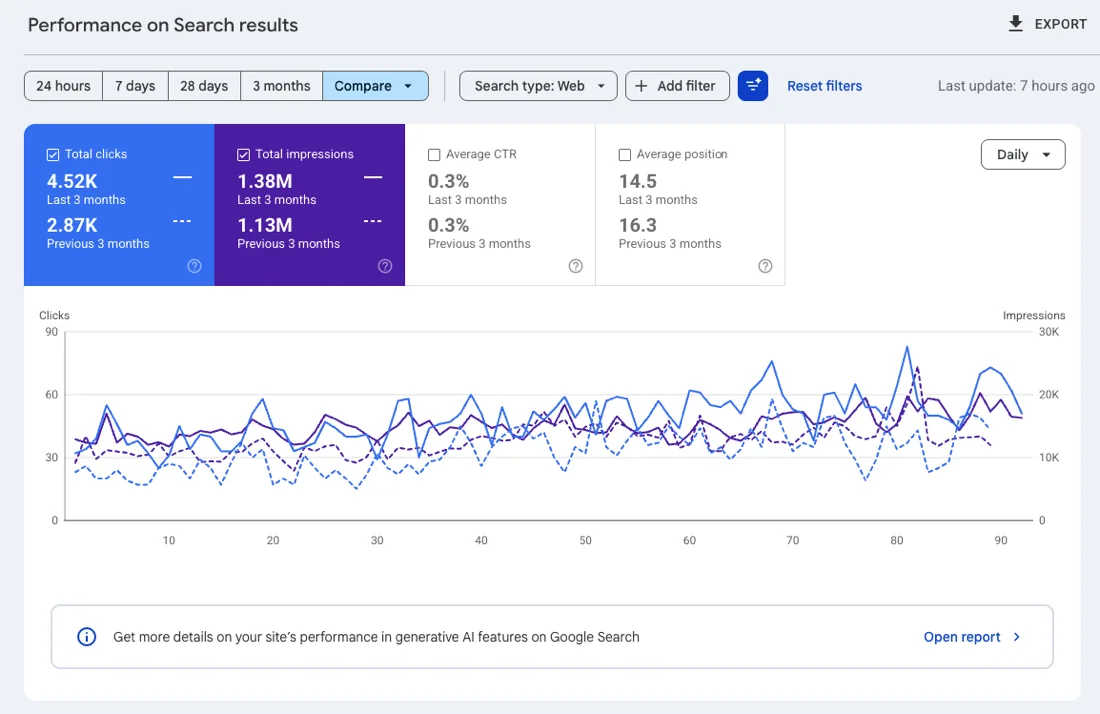
Measured before and after, quarter against quarter: clicks from 2.87K to 4.52K and average position from 16.3 to 14.5, in Google's own reporting.
Proof, not promises
Technical work shows up in every case we publish. Watch more on our video reviews page and YouTube channel.
A Shopify store went from page 3 to category leader with technical and content SEO.
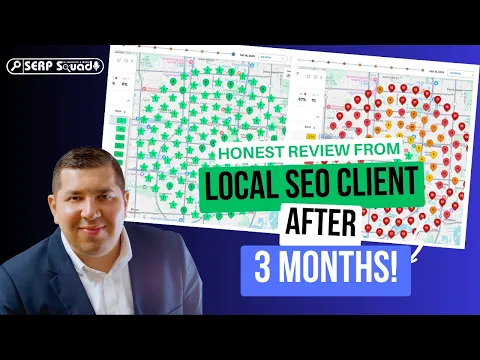
A medical clinic's local visibility transformed after our SEO work took over.
★★★★★“They explained everything in plain English and the rankings followed.”
The first 90 days
Measured before, measured after, on everything:
Crawl, log analysis and field-data vitals baselined so every fix has a before number.
Canonical policy, redirect cleanup, index hygiene and the first vitals work shipped.
Field data confirms vitals movement, crawl stats show budget refocusing on money pages.
Structured data expansion, rendering fixes and continuous monitoring against regressions.
What gets checked
Technical SEO gets sold in acronyms. Here is what each one actually decides about your site, so you can judge a quote instead of taking it on faith.
Two separate questions people merge into one. Crawlability is whether Google can reach a page: robots.txt rules, crawl depth, orphan pages nothing links to. Indexability is whether it is allowed to keep it: noindex tags, canonicalisation that points elsewhere, thin duplicates competing with each other. A page can be perfectly crawlable and still never appear.
A sitemap is a claim about which pages matter. When it lists URLs that return a 404, redirect elsewhere, or carry a noindex, it tells Google your own inventory is unreliable. We keep it generated from the live page set rather than maintained by hand, and split it behind a sitemap index once the site outgrows a single file.
Largest Contentful Paint is how long the main content takes to appear. Interaction to Next Paint is how long the page takes to answer a tap. Cumulative Layout Shift is how much it moves under a thumb. Behind all three sits Time to First Byte, render-blocking scripts, image weight and whether a CDN and lazy loading are doing their jobs. All of it is judged against Search Essentials, the document that replaced the old Webmaster Guidelines.
Every URL returns a status code, and the wrong one quietly costs rankings: soft 404s that return 200 for a missing page, redirect chains that lose equity at each hop, and old URLs left to die instead of pointing at their replacement.
Schema markup written as JSON-LD, with the nodes joined by ID so a crawler resolves one business rather than several look-alikes. Marked-up services, breadcrumbs and FAQs, with about and mentions used to tie a page to the entities it covers, are what make a listing eligible for rich results, and what AI assistants read when deciding who to name.
Content that only exists after JavaScript runs is content Google may never see. Pagination and faceted navigation generate near-infinite URL combinations that eat crawl budget. Log file analysis settles the argument by showing what Googlebot actually requested, rather than what the site hoped it would. Where something has to disappear fast, the Removals tool buys time while the real fix ships.
Transparent reporting
Technical reporting shows the before and after on everything we touch:
LCP, CLS and INP from field data per template, monthly, with the fixes that moved them.
What Googlebot fetched, what got indexed and what noise was removed, from logs and Search Console.
Every fix shipped with its measured effect, so technical work never feels opaque.
What works now
Every one of these channels reads your site's technical layer. Fix the foundation once and all six get stronger together.

Crawlability, vitals and clean rendering are what let Google rank your pages at all: the technical floor every organic position stands on.

Bing's crawler rewards clean architecture and IndexNow adoption, feeding Copilot answers from the same fixes that help Google.

Consistent entity data flows from your site to Apple's index. Technical consistency keeps your Apple Business Connect listing trusted.


AI assistants parse your structured data and clean HTML directly. Technical SEO decides whether they can read, trust and cite you at all.


Fast, stable landing pages turn social clicks into conversions instead of bounces, protecting the value of every channel pointing in.

Video schema and fast embeds let your video content enrich pages without sinking vitals, feeding both YouTube search and AI answers.
Every one of these channels is part of our SEO services; your audit shows which will move first for you.
Honest comparisons
When a site underperforms, three prescriptions compete. Honestly:
Publishing onto a broken foundation is pouring water into a cracked tank. Crawl, render and speed fixes multiply every piece of content you already own.
Rebuilds are quoted because they bill well. Most technical debt clears through targeted fixes at a fraction of the cost, and without gambling your existing rankings.
GEO, being cited when AI engines parse your site, is not a rival discipline. Generative engines lean on the same authority, structure and entity signals strong SEO builds. Rendering and structured data decide if AI can read you at all.
Service areas
Strategy tuned to how people search in each market. See every market on our service locations page.
Related services
Pay after the leads arrive
Ask about pay for performance SEO company if you would rather tie the cost to the outcome. Leads are counted monthly from tracked sources, disputed ones come off the invoice, and there is no lock-in period.
Buyer beware
Technical SEO is where jargon hides the least work. Patterns behind impressive-sounding invoices:
The most common scam is the simplest: a retainer collected every month with no work log and no report. If an agency cannot show you exactly what was done in the last 30 days, the honest answer is usually nothing.
Some agencies register your domain, own your hosting and keep your logins, then the site vanishes if you stop paying. Your domain, website and Google Business Profile must be owned by you, always.
Hundreds of auto-generated blog posts feel like activity, but unedited AI content nobody reads produces no leads and can drag the whole site down. Volume is not a strategy; content only counts when it answers real searches.
Nobody controls Google's results, and Google itself says ranking guarantees are the mark of a scam. Real agencies show evidence and timelines; fake ones sell certainty they cannot deliver.
A 12-month contract exists so an agency gets paid whether it performs or not. If the results were real, the contract would not need to trap you, which is why we do not use one.
Thousand-link packages from link farms and PBNs look like progress until Google catches the network, and it is your site that takes the manual action. Recovering costs more than the links ever did.
Ask any agency, us included, for three things before you pay: a sample monthly report, written confirmation that you own your domain, website, hosting and Google Business Profile, and the work log from a current client's last 30 days. We show all three in your free audit call, plus reviews you can verify on Google and Trustpilot. An agency that hesitates on any of them has answered your question.
Everything between your content and Google's index: crawlability, rendering, speed, duplicates, structured data and redirects. When technical foundations are broken, content investment leaks.
Yes, on sites where crawl budget matters. Logs show what Googlebot actually fetches, which is frequently very different from what the sitemap suggests, and the gap is where rankings hide.
We test what Google actually renders, then fix the gap: server-side rendering where needed, critical content out of client-only JavaScript, and hydration that does not block the crawl.
Yes. Rendering is a first-class audit item: we test what Googlebot actually receives, and prescribe SSR, prerendering or hydration fixes where client-side rendering is hiding your content. Next.js and similar frameworks are routine work.
That is the model. We diagnose, specify and verify; your team ships, or we do it where you prefer. Every fix comes as a ticket with acceptance criteria, not a vague recommendation.
Fresh from the desk
What we publish between campaigns. Worth a read if you want to understand how this work actually gets done before you pay anyone to do it.
We run a focused technical pass: vitals from field data, a crawl sample and an index check, and tell you whether technical work is your bottleneck or not.
