

Homeowners whose solar installer closed, sold up or stopped answering the phone still have panels on the roof, an inverter on the wall and a monitoring app that may have gone quiet. They search for someone to fix it, and most local installers have nothing on their site that says "we service systems we didn't install". A solar panel repair company that says it clearly, page by page and on its Google profile, picks up work that keeps crews busy between installs.
This is where a lot of residential solar is heading anyway. Below is where that demand comes from, the pages and profile setup I'd use to get found for it, and the mistakes that cost installers the trust of owners who've already been let down once.
Why service, repair and battery work is growing
Solar Power World's residential solar news coverage has tracked a steady run of acquisitions and consolidation among installers this year, including a solar company buying a repair brand in Hawaii, alongside more coverage of batteries, virtual power plants, battery leasing and remote inspection. When a trade publication's residential section starts reading like that, the work is shifting from selling new systems to looking after the ones already on roofs.
The installers left standing are being pushed toward running tighter businesses. pv magazine's report on a coalition helping regional solar installers compete lists sales funnels, pricing strategy, tariffs and working capital as the skills it's teaching. Service revenue is one of the steadier answers to all four, because it doesn't depend on a homeowner deciding to buy a new system.
The solar marketing after the 25D repeal side of this, selling new systems honestly when the credit is gone, is its own problem. This post is about the owners who already have solar and need help with it.
What owners of orphaned solar systems need
An orphaned system is one whose installer is no longer around to honor the workmanship warranty or answer the phone. These are the jobs I'd expect those owners to be searching for, and the ones I'd build pages around:
- The system stopped producing or the monitoring went offline. Often an inverter fault or a lost connection, and the owner has no idea which.
- The inverter needs repair or replacement. String inverters in particular tend to need replacing well before the panels are worn out.
- The roof needs replacing and the panels have to come off. Removal and reinstall is a job roofers and owners both need a solar company for.
- They want a battery added to an existing system. Whether their equipment is compatible is the first question.
- They want someone to check it once a year. An inspection, a production check against what the system should be making, cleaning where it matters.
- A business or landlord needs ongoing operations and maintenance. Commercial owners often want a service contract rather than one-off call-outs.
How to get found as a solar panel repair company
- Decide exactly what you'll service, and write it down. Which inverter, microinverter, optimizer and battery brands your technicians know, whether you take systems installed by other companies, and whether you'll work on systems from companies that have closed. Say yes or no to each. Vague "we service all systems" wording attracts calls you can't take.
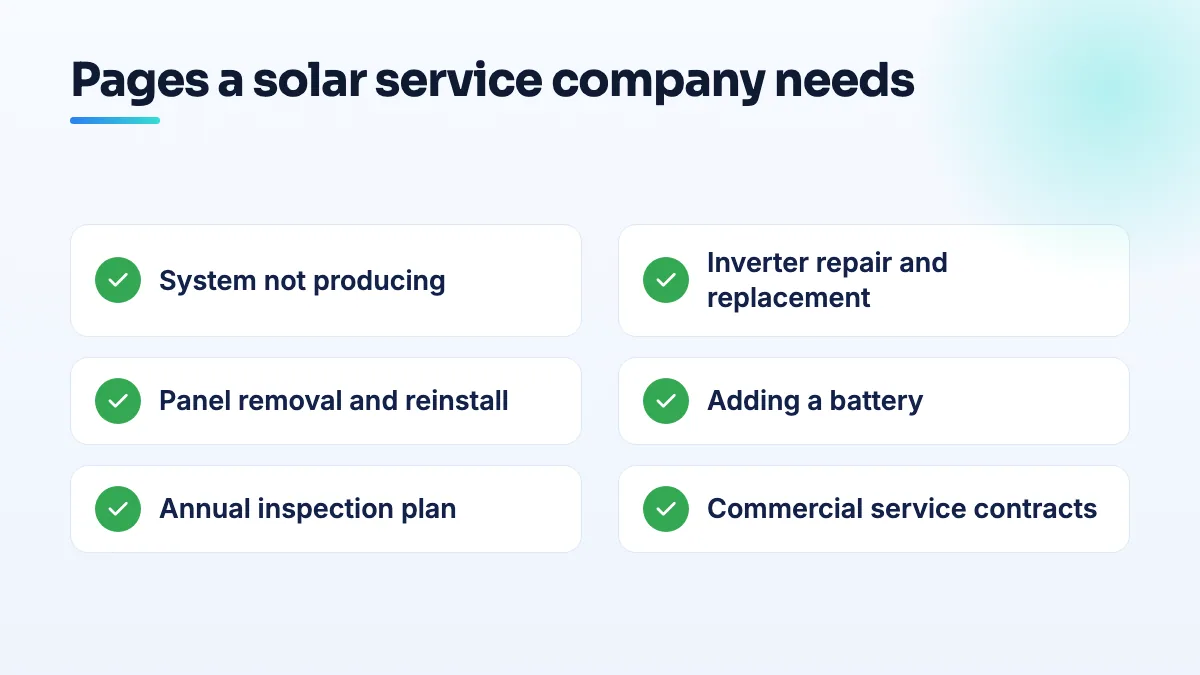
- Build one page per job, not one "services" page. A page for system not producing, one for inverter repair and replacement, one for panel removal and reinstall, one for adding a battery, one for annual inspections, one for commercial service contracts. Each page says what you check, how you charge for the first diagnostic visit, which brands you work on and which towns you cover.
- Put the orphaned-system message where it's seen. A plain line near the top of your homepage and each service page: "We service systems installed by other companies, including installers that are no longer in business." That sentence is what the owner is looking for.
- Add the service work to your Google Business Profile. List each job as a service with a short description, and if Google offers a category that matches solar service or repair and it fits your business, add it as a secondary category. Post photos of real service jobs, such as an inverter swap or a removal before a reroof, with the town named.
- Keep the service area honest. Service calls are short jobs, so list the towns you'd actually drive to for a diagnostic visit. A service area far wider than reality is one of the settings behind suspensions of home-service profiles, and it doesn't help you rank there anyway, as I explain in the answer on whether service area affects Google ranking.
- Ask every service customer for a review that names the fix. "They replaced our inverter after our installer went out of business" is exactly the review the next orphaned owner wants to read. Ask when the system is back online and they can see it working.
- Offer something ongoing. A yearly inspection or monitoring plan turns a one-off repair into a customer you'll see again, and it's the easiest page to link from every repair page.
Pages for a solar battery installer
Battery work deserves its own section of the site, because the buyer's questions are different from a repair customer's. The owner of an existing system wants to know three things before they call:
- Will a battery work with my system? List the inverter setups you can add storage to and what changes when you do.
- What will it actually do for me? Backup during outages, shifting use to cheaper times, or taking part in a utility or virtual power plant program if one exists in your area. Only mention programs that genuinely operate where you work.
- Who installed the rest of it, and does that matter? Say whether adding a battery affects any remaining equipment warranty, and what you'll warranty yourself.
Write one battery page for adding storage to an existing system and a separate one for a new solar and battery install. They're different buyers asking different questions.
Working with roofers on removal and reinstall
Every reroof under an existing solar array needs someone to take the panels off and put them back. Roofers need a solar company they can rely on for that, and it's steady work. The consolidation Solar Power World reports includes roofing and solar companies combining, which tells you how closely the two trades now overlap.
I'd build a removal and reinstall page written partly for roofers: how to book you, how much notice you need, how you document the system's condition before removal and what you test after reinstall. Then tell the roofers you already know that the page exists.
What not to do
- Don't run down the installer that closed. The owner chose them. Explain what's wrong with the system, not what was wrong with the company.
- Don't claim to be an authorized warranty provider for a brand unless you are. Owners of orphaned systems have been let down once. A false claim loses them for good.
- Don't create a separate Google profile for a "service division". Unless it's genuinely a separate business with its own location and staff, it belongs on your main profile as services.
- Don't copy the same repair page for every town. One strong page per job with real local examples does more than dozens of near-duplicates.
- Don't quote a repair price over the phone for a system you haven't seen. Publish what the diagnostic visit costs instead, so the owner knows what the first step is.
Questions people ask
Can I service a system another company installed?
That's your decision, and your equipment suppliers' terms may matter. Whatever you decide, say it on the site. Owners want a clear yes or no before they call.
Should service have its own brand?
Only if it's genuinely run as a separate business. For most installers, the reviews and history you already have are worth more on one profile than split across two.
Where to start
Write the sentence "we service systems installed by other companies" on your homepage today if it's true, then build the "system not producing" page first, because that's the most urgent call an owner makes. If you want the pages and the rankings built properly, it's what our solar company SEO work covers, alongside the profile side of our local SEO services.
Written by Saifur Rifat, Founder & SEO Lead at SERP Squad.